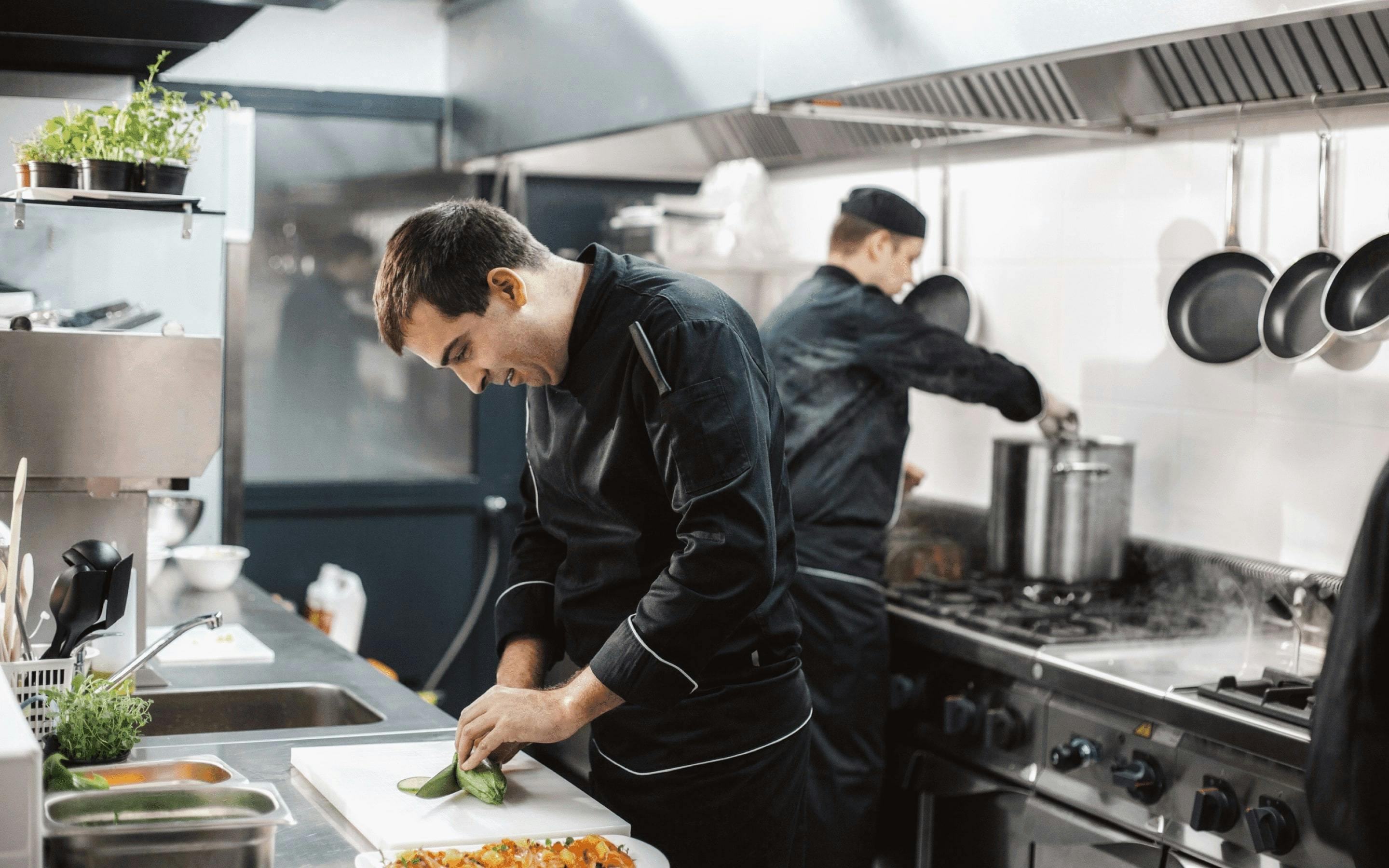
Andreas Borgmann is, by his own admission, a serial entrepreneur. But among all the ventures he’s pursued, Kcal holds a special place. As an extreme biohacker, he couldn’t find a single restaurant that met his standards, so in 2010, Kcal Healthy Fast Food was founded. What started as a deeply personal mission has since grown into seven interconnected F&B businesses, each tackling a different corner of the industry.
Spotting the Gap, Building the Brand
Kcal was never just a business idea — it was a conviction. Andreas only eats Kcal, which says everything about the standard the brand holds itself to. Over the years, that uncompromising approach has resonated widely, turning a single healthy fast food concept into a multi-brand operation with a loyal following across the UAE and beyond. With delivery making up 85% of Kcal’s total business, having the right operational infrastructure wasn’t just helpful; it was essential.
The Challenge
Scaling a multi-brand F&B operation comes with its own set of pressures. For Andreas, the biggest drain wasn’t the food but everything around it.
- Operational noise: Dealing with landlords, negotiating leases, and scouting locations consumed time and energy that could have gone directly into growing the business.
- High entry costs: Traditional restaurant fit-outs across multiple locations meant significant capital outlay, with no guarantee of return, a risk that compounds quickly when scaling across markets.
- Execution speed: As a serial entrepreneur, Andreas needed a setup that could move as fast as he could think. Lengthy back-and-forths with property stakeholders were simply incompatible with that pace.
Nothing captures it quite like the experience itself. “Anyone who’s opened a restaurant, speaking to landlords, it’s a nightmare […] Imagine if you can remove all that […] I can focus on the business, not focusing on all this other noise.”
The Solution
That’s exactly what KitchenPark did: removed the noise. By operating out of KitchenPark’s delivery-optimised cloud kitchens, Andreas was able to cut through the usual friction of expansion and focus entirely on what matters: making great products. No drawn-out lease negotiations, no unnecessary delays — just a clear timeline and a kitchen ready to go.
It’s a setup that suits the pace of how Kcal operates. “The ease and speed that we can execute on works great for me,” he says.
The simplicity of the model has been a particular asset as the brand scales regionally. For businesses deepening their production capabilities, options like central production kitchens offer the infrastructure to grow without overextending, while CloudRetail® opens the door for operators ready to branch into retail, a natural next step for an enterprise as established as Kcal.
The Results
Three years into the partnership, Kcal continues to expand, with KitchenPark now accompanying the brand into Kuwait and Saudi Arabia.
- Faster market entry: Streamlined onboarding meant less time setting up and more time trading.
- Regional scalability: The KitchenPark model has made cross-border expansion more accessible and far less capital-intensive than the traditional route.
- Low-risk testing ground: For F&B operators weighing up new markets, the reduced CapEx means brands can validate demand before committing fully. “If you want to test and move on, then it’s a lot easier entry so you can scale much faster.”
Beyond the numbers, it ultimately comes down to something more fundamental for Andreas. “I enjoy KitchenPark because of the communication and transparency, which, for me, is key,” he adds.
Looking Ahead
For Andreas, the recommendation is straightforward. If you’re serious about scaling an F&B brand, reduce the barriers wherever you can. “The easiest access is to work with somebody like KitchenPark,” he puts it plainly.
With Kcal continuing to grow across the Gulf, and KitchenPark by their side at every step, the partnership looks set to go well beyond what either party initially imagined. As Andreas puts it, “Removing all the noise and just focusing on making good products — that’s the biggest achievement, but it’s a continuous achievement.”